Solar Fall Protection Systems
Rooftop solar puts workers close to edges, skylights and roof hatches while leaving less room to move. Once modules, racking and conduit are in place, a simple service call can require a carefully planned route across the roof.
HySafe designs, engineers and installs fall protection for commercial solar roofs, solar carports, PV canopies and elevated equipment. We plan for installation crews and the people who will inspect, clean and repair the array for years to come.
Guardrails, anchors, lifelines, walkways and safer roof access help crews reach the work while protecting the roof and keeping service paths open.
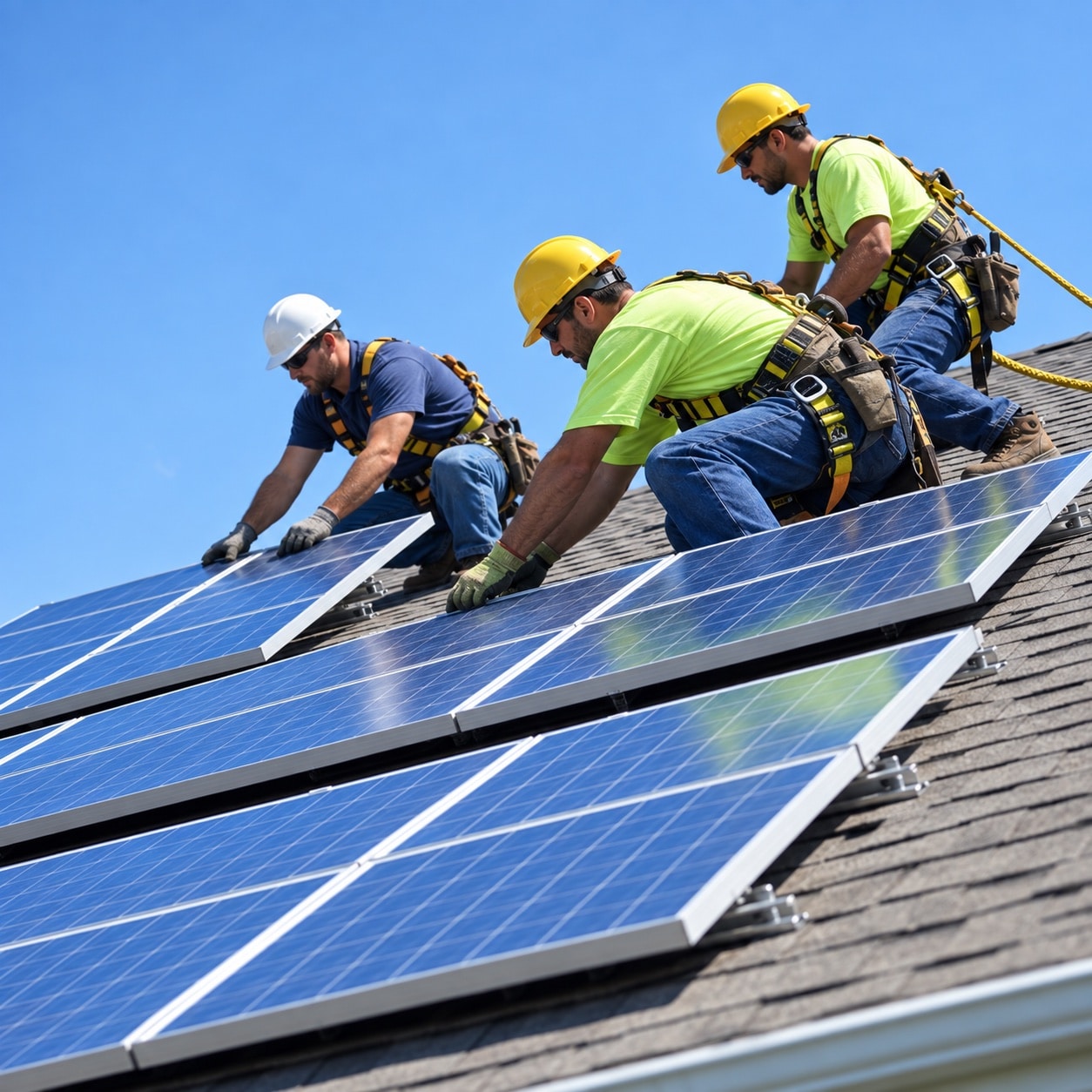
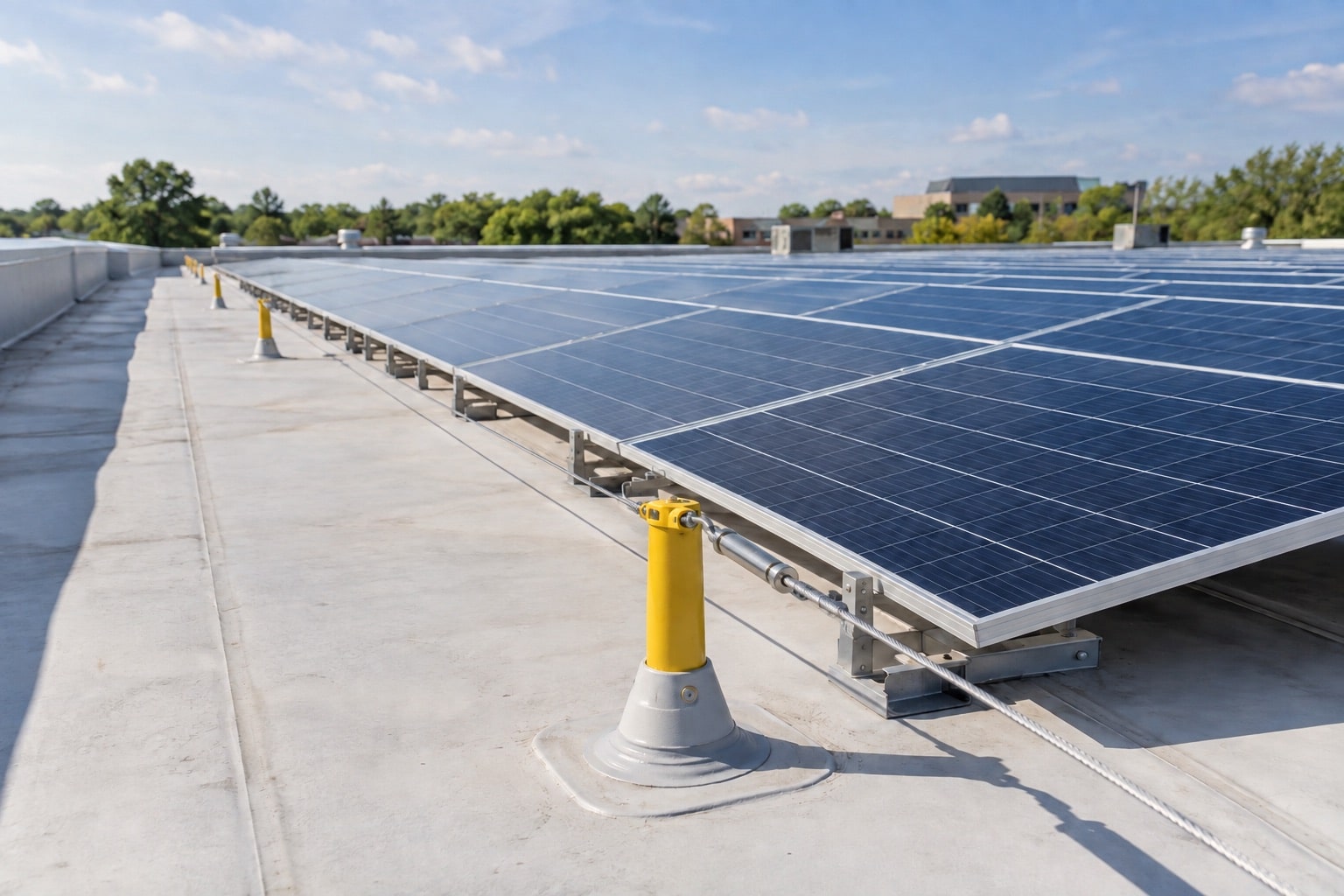
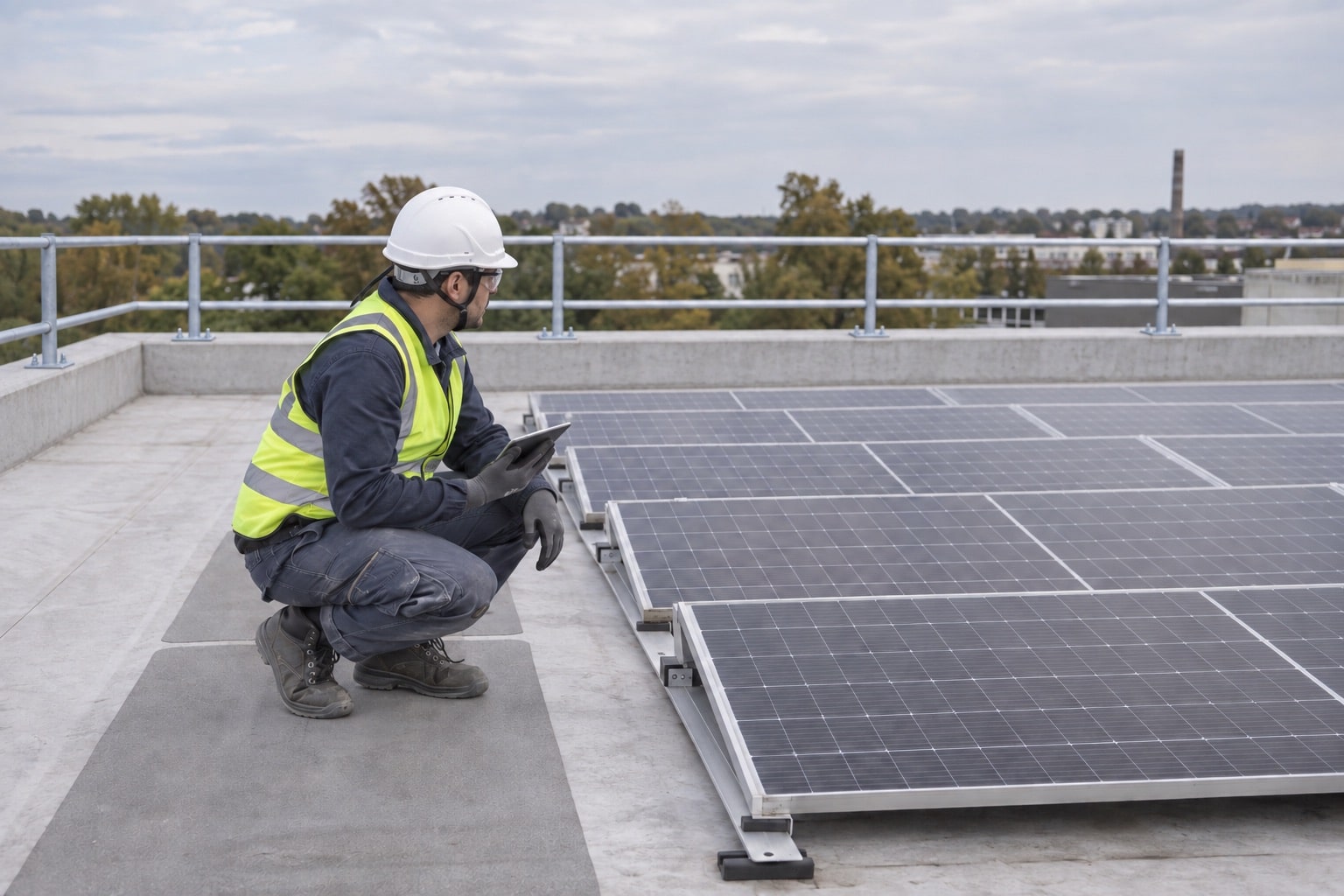
Fall Protection Requirements For Solar Work
Solar installation is generally construction work. OSHA requires fall protection when installers are exposed to a fall of 6 feet or more to a lower level (29 CFR 1926.501). Routine inspection, cleaning and repair usually fall under General Industry rules, where the common trigger is 4 feet (29 CFR 1910.28). Skylights and roof openings require protection when they expose workers to a fall.
The applicable rule follows the task, not the panels. Installation and maintenance crews may use the same roof under different requirements. HySafe reviews access, array layout, edge exposure and the jobs that will be performed after commissioning.
The safest plan prevents a fall where practical. Guardrails and covers remove the need to connect, while travel restraint keeps a worker from reaching the hazard. Fall arrest requires verified anchorage, adequate clearance, compatible equipment, trained users and prompt rescue. HySafe systems are designed and installed to meet OSHA requirements and applicable ANSI Z359 standards.
Common Solar Fall Hazards

Unprotected Roof Edges
Arrays often extend close to the usable perimeter. Installers and technicians working on the outer rows may have little room between the modules and the edge, especially when carrying tools or moving sideways.

Skylights, Hatches & Roof Openings
Panel shadows, glare and narrow aisles can make skylights harder to see. Screens, covers, guardrails and self-closing gates protect fragile surfaces and the access openings crews use on every visit.

Sloped & Weather-Exposed Roofs
Metal, membrane and tile roofs can become slippery from dust, dew, ice or cleaning water. Roof slope, surface condition, drainage and the supporting structure all affect the type and placement of protection.

Ladders & Roof Access Transitions
Protection should begin before a worker steps away from the ladder or hatch. The climb, landing and travel path need to connect without leaving an exposed gap at the roof edge.

Tight Module Rows & Service Routes
Racking, cable trays, conduit, ballast and rooftop equipment interrupt normal foot placement. Defined walkways and crossovers give crews a repeatable route without stepping on modules or climbing over equipment.

Panel Handling & Replacement
Large modules can block a worker's view and catch the wind near an edge. Panels should be lifted to the roof with suitable equipment rather than carried up ladders, and replacement work needs the same planning as the original installation.
Engineered Solar Fall Protection Systems
The right system depends on the roof, structure, array layout and how often crews need access. HySafe reviews the full route from the ladder or hatch to the work area before recommending equipment.

Non-Penetrating Guardrail Systems
Ballasted guardrail can protect roof edges, hatches and service zones without attaching through the roof on suitable low-slope buildings. Wind, loading, drainage, roof condition and manufacturer requirements must be checked for each project.

Horizontal Lifeline Systems
Cable lifelines provide continuous tie-off along long panel rows, roof perimeters and maintenance routes where guardrail is not practical. The design accounts for deflection, clearance, swing fall and user capacity.

Roof Anchors & Travel Restraint
Engineered anchors can support restraint or fall arrest when their spacing, strength and use are verified. Restraint is preferred where it lets a worker complete the task without reaching an edge or opening.

Skylight & Hatch Protection
Rated screens, covers, guardrails, hatch rails and gates protect openings that may sit between or beside module rows. The product must match the curb, opening, access needs and required loading.

Ladder & Roof Access Systems
Fixed ladders, vertical lifelines, stairs, gates and landing protection create a safer transition onto the roof. Access should lead into a protected area or a clearly defined route.
Walkways, Crossovers & Service Paths
Engineered walkways give technicians stable footing around conduit, equipment and changes in elevation. They also protect the roof surface and keep routine maintenance on a predictable path.

Temporary & Custom Systems
Portable anchors, temporary guardrails and custom layouts cover installation, retrofit and unusual structures. Carports and PV canopies often need a solution designed around their framing and access.

Plan Safety Before The Array Fills The Roof
The best time to solve rooftop access is while the array is still being laid out. Early coordination can reserve space for guardrails, lifelines, walkways, drainage, equipment replacement and access paths required by the local fire code and authority having jurisdiction.
Attachment details follow the roof and structure. Standing-seam metal, exposed-fastener metal, single-ply membrane, built-up roofing and concrete each require a different review. A ballasted or seam-mounted option may avoid penetrations, but no non-penetrating solution fits every roof.
For retrofits, HySafe verifies roof condition, structural support, warranty constraints, array clearances and fall clearance before design. Materials are selected for the site's UV, wind, snow and coastal exposure, with recertification support for long-term use.
Every HySafe fall protection system follows the same proven process: assess the roof, design and engineer the solution; then install it with training for the crews who will use it. Annual inspection, including maintenance and repairs, keeps the system compliant and your workers protected whether HySafe installed the original system or not.

System Comparison At A Glance
| Application | Typical Approach | Key Design Check |
|---|---|---|
| Open roof perimeter | Guardrail, restraint, anchor or lifeline | Access frequency, edge distance, wind and clearance |
| Standing seam roof | Approved seam attachment or guardrail | Seam profile, clamp approval, structure and warranty |
| Membrane or low slope roof | Ballasted guardrail, anchor or lifeline | Roof assembly, loading, penetrations and drainage |
| Skylights and hatches | Screen, cover, rail or self-closing gate | Opening type, curb, access and load rating |
| Dense panel rows | Walkway, crossover, restraint or lifeline | Service route, trip hazards, reach and clear width |
| Installation or retrofit | Temporary protection or permanent system | Sequence, verified anchorage, inspection and rescue |
Categories

Frequently Asked Questions
What fall protection is required for rooftop solar installation?
Solar installation generally falls under OSHA Construction standards. Workers exposed to a fall of 6 feet or more must be protected by an allowed system such as guardrails, safety nets or personal fall arrest. Skylights and roof openings also require protection when they present a fall hazard.
Do solar panels need fall protection after installation?
The panels do not, but the people who inspect, clean and repair them do. Maintenance is generally covered by General Industry rules, which address low-slope roof work based on distance from the roof edge. Permanent protection makes future service safer and reduces the need to improvise on each visit.
Can solar fall protection be installed without penetrating the roof?
Sometimes. Ballasted guardrails and certain standing-seam attachments can avoid penetrations, but they are not suitable for every building. Wind, roof assembly, seam profile, loading, drainage, manufacturer instructions and warranty requirements must be reviewed first.
What is the best fall protection for solar panel cleaning and maintenance?
Frequent access often favors passive guardrail at hatches and exposed service zones, with restraint, anchors or lifelines along the route. The best combination depends on the roof, array layout, work frequency, clearance and number of users.
Are skylights a fall hazard on solar roofs?
Yes, OSHA treats a skylight as a hole in the roof. A skylight may look solid and can be harder to see between modules. Depending on the opening, protection may include a rated screen, cover, guardrail, travel restraint or personal fall arrest.
Can an existing solar array be retrofitted with fall protection?
Yes. HySafe can design around existing racking, panel rows, roof access, equipment and warranty constraints. Our assessment covers attachment options, service paths and installation sequence, and we handle the design, engineering and installation from there. That's what we mean by making engineered fall protection easy.
Protect The Crews That Keep Solar Running
Solar maintenance starts at the ladder and continues across the whole roof. A safe route should cover the climb, the landing, movement between panel rows and the return trip, not only the outer edge.
Talk to a HySafe specialist about fall protection for a new solar project or an existing array.
Testimonial
“The HySafe experts made it very easy to understand the OSHA requirements and it was a pleasure working with them from concept through installation and training.”
Vince Williamson
Quality Director, Rahco Rubber
We know how to protect workers at-height.
What sets HySafe apart is how we use our knowledge. We pair education and expertise to make engineered fall protection easy.