Roof Anchors
Roof anchors are vital components of fall protection systems, providing secure attachment points for workers operating at heights. They help prevent serious injuries and ensure compliance with OSHA regulations, which require certified fall protection for work above six feet.
We engineer a full range of permanent and temporary anchors to meet the demands of any industry. Each anchor, permanent and temporary, is designed to meet or exceed OSHA and ANSI standards. Our solutions are tailored for commercial, industrial, residential, and specialty applications, helping businesses protect workers safely and efficiently.
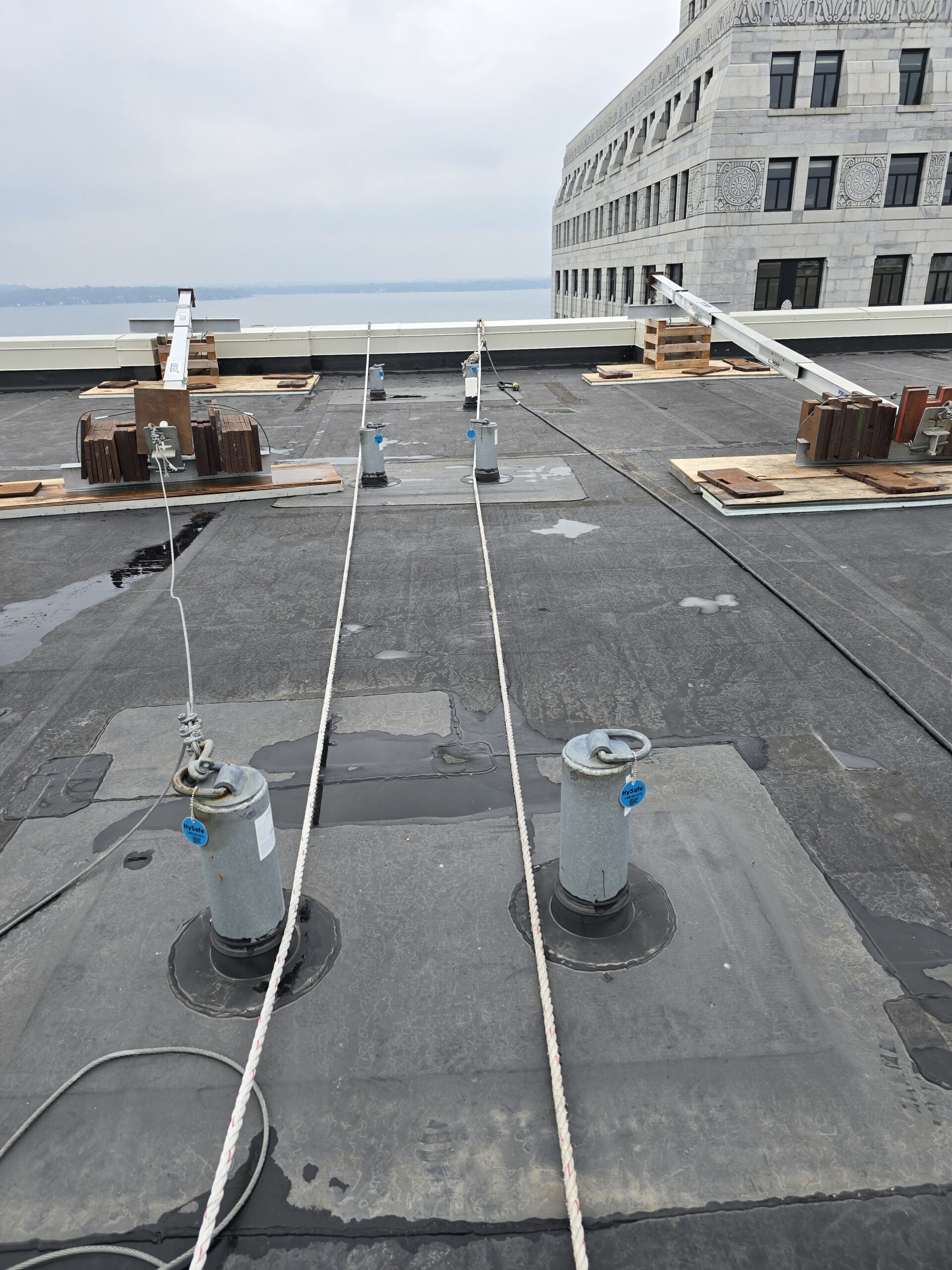
Benefits
Various attachment options
Available for a range of applications
Permanent or temporary
Long or short term needs
Increased worker safety
Provides secure tie-off
Types of Roof Anchors by Mounting Method

Permanent Roof Anchors
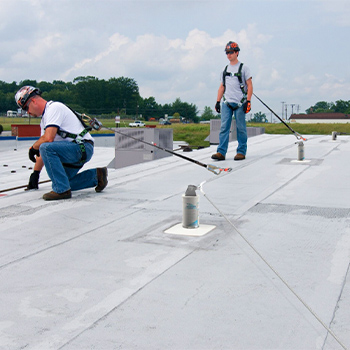
Permanent anchors are designed for locations requiring frequent or ongoing access. They may be welded, bolted, or embedded into the structure and can be integrated into new construction or retrofitted to existing buildings. Anchors can provide a reliable, ready-to-use connection point eliminating the need to reinstall temporary systems for routine work. Permanent fall protection anchors can be installed as standalone tie-off points or integrated into an engineered system.

Temporary Roof Anchors
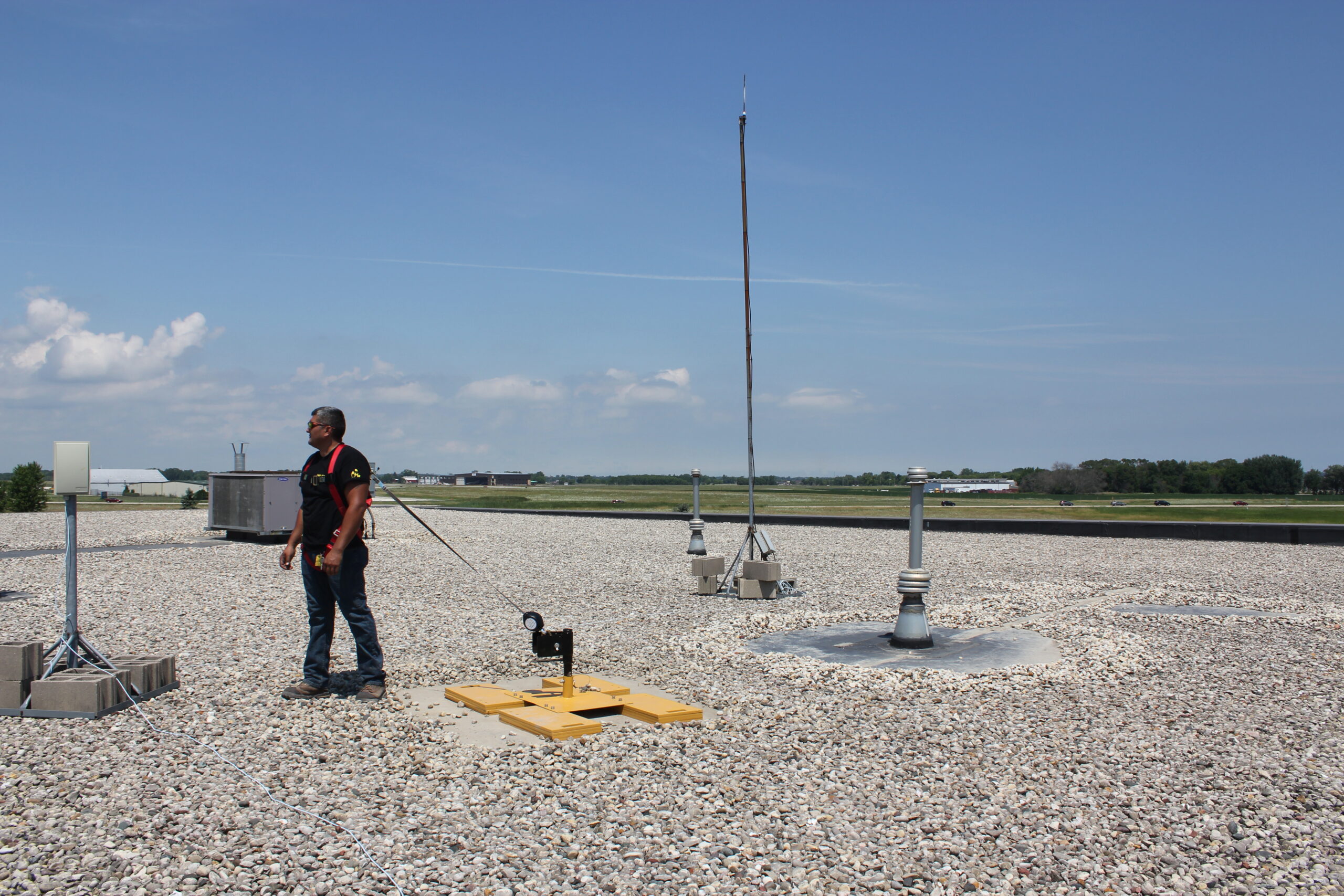
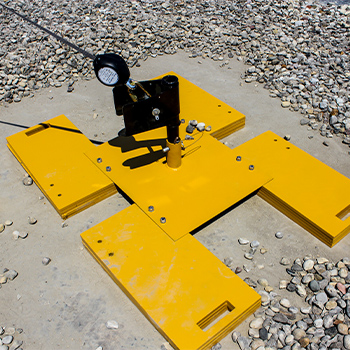
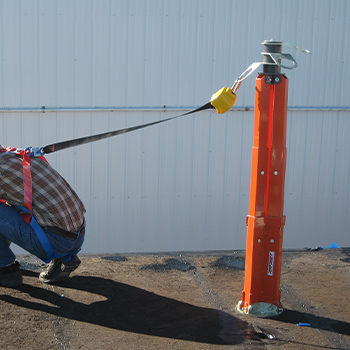
These anchors can be installed and removed as needed. Portable single point anchors are easy to put on and take off without permanently attaching to the roof. A weight anchor system uses weights to provide a free-standing tie-off point. Other temporary anchors clamp onto structures, such as roof parapet walls or standing-seam roofs, without causing damage, and options like our joist anchor provide secure solutions for indoor applications. They provide an ideal solution for workers who frequently transition between different sites. Temporary roof anchors can be a cost-effective solution for short-term or changing job sites.
Roof Anchor Applications And Solutions
Roof anchors are commonly used in many industries and for various tasks. They are essential for building maintenance work such as window washing and façade repairs. Technicians rely on roof anchors for HVAC installation and repair jobs. Roof anchors also protect workers installing solar panels and telecommunications equipment. They are important for routine roof inspections and emergency repairs. On residential roofs, anchors help keep workers safe during chimney cleaning, gutter servicing, and skylight repairs. Each situation may require different types of roof anchors depending on the building and job.
Roof Anchor Points
- Rigid Post & Tip-Over Anchors:
Common in engineered systems for low-scope roofs.
- Vacuum Anchors:
Suitable for smooth, non-porous surfaces where penetration isn't possible.
- Single D-Ring or Eye-Bolt Anchors:
Offer simple, single-user tie-off options for maintenance and light construction.
How to Choose the Right Roof Anchor System

Check your roof type:
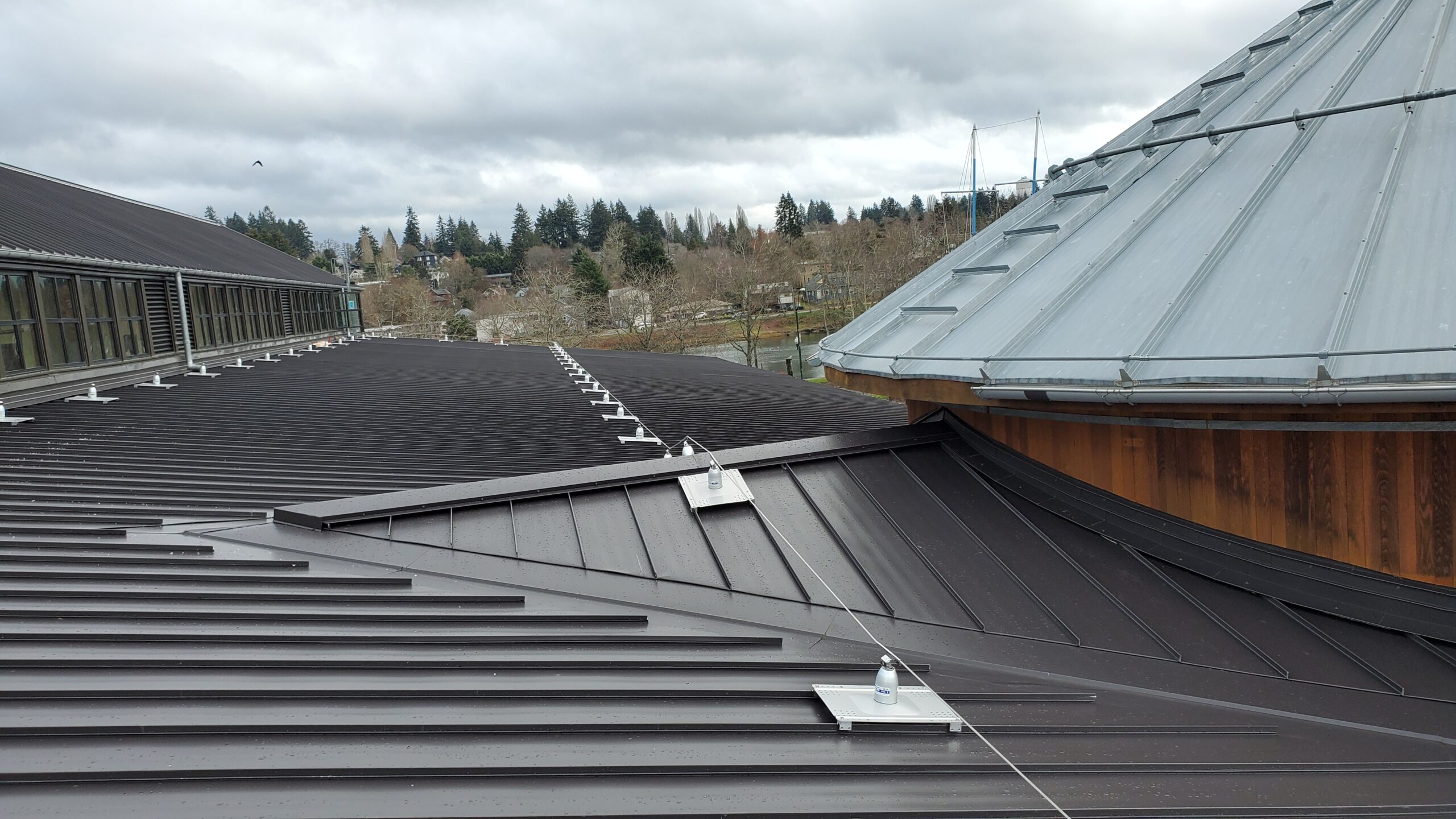
Flat and pitched roofs need different anchors. Also consider the roofing material (asphalt, membrane, concrete, metal). Anchors for corrugated metal roofs need to fit their ribbed shape without damage.

Know the user needs:
How many workers need to access the area at one time? What fall protection systems will be used? Will the anchors work with horizontal lifelines or alone?

Consider the environment:
Anchors must handle wind, sun (UV), and chemicals, especially in industrial areas.

Decide on permanence:
Permanent roof anchors are best for frequent roof access. Temporary roof anchors suit short-term or occasional work.

Think about looks:
For homes or architecturally important buildings, choose low-profile anchors that blend in with the roof.
Categories

Frequently Asked Questions
What are roof anchors for?
Roof anchors are used as secure attachment points for personal fall arrest systems. They help protect workers from falls when working at heights, especially during maintenance, construction, or installation activities on rooftops. Anchors can function as stand-alone single-point anchors or be integrated into a fully engineered fall protection system for complete coverage.
Where are the roof anchors located?
Roof anchors are typically installed at a minimum of 5 ft. from the roof edge to avoid excessive free fall, near roof hatches, or along pathways where maintenance or inspection work is performed. The location depends on the building layout and access needs.
Should I install a permanent roof anchor?
If your building requires regular rooftop access, installing a permanent anchor system is a smart investment. It ensures ongoing safety, reduces future setup time, and enhances compliance with OSHA regulations.
How many roof anchors are needed?
The number of anchors required depends on the size and layout of the roof, the number of workers, and the type of work being performed. A HySafe fall protection specialist can assess your site and recommend the correct quantity and placement.
What is the distance between roof anchors?
Anchor spacing depends on system design, roof layout, and fall distance requirements. Engineered horizontal lifelines may range from 20 to 60 feet between anchors, while single-point anchors should be positioned to maintain a safe working radius. Single-point anchors should be positioned close enough to allow a worker to connect to the next anchor before disconnecting from the current one, always ensuring continuous tie-off in fall-hazard areas.
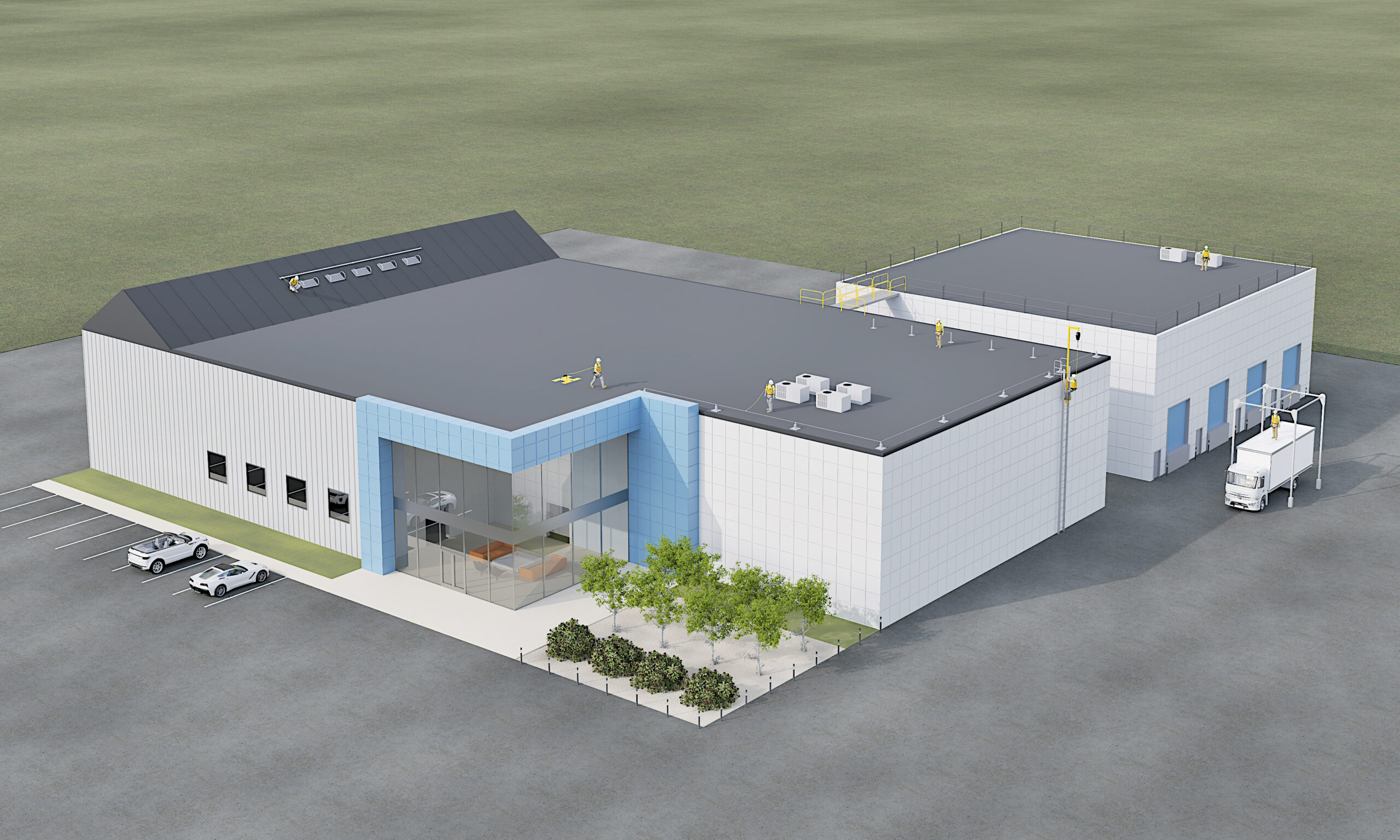
Skylights with Screens
Durable Lifelines
Heavyweight Anchor
Comfort & Flexibility
Hands-Free Movement
Safety Guardrail
Anchor Solutions
Hazard Protection
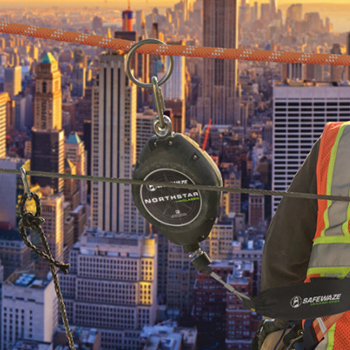
Self-Retracting Lifeline
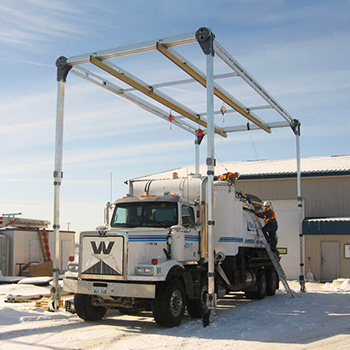
Adjustable HyBox
Testimonial
“The HySafe experts made it very easy to understand the OSHA requirements and it was a pleasure working with them from concept through installation and training.”
Vince Williamson
Quality Director, Rahco Rubber
Our Industries
Transportation
Custom fall protection for railroads, airports,
shipyards and trucking centers.
Stadium & Arena
At height safety systems for entertainment venues
and convention centers.
Amusement
Custom solutions for amusement parks and rides
including roller coasters.
Education
At height protection for universities, high schools
and school systems.
Manufacturing
Fall protection solutions for industrial, agricultural
and chemical plants.
Government & Military
At height safety solutions for the armed forces and
military bases.
Construction
Custom protection for new construction,
expansions and general contractors.
Retail & Commercial
At height safety solutions for hotels, restaurants
and property management.
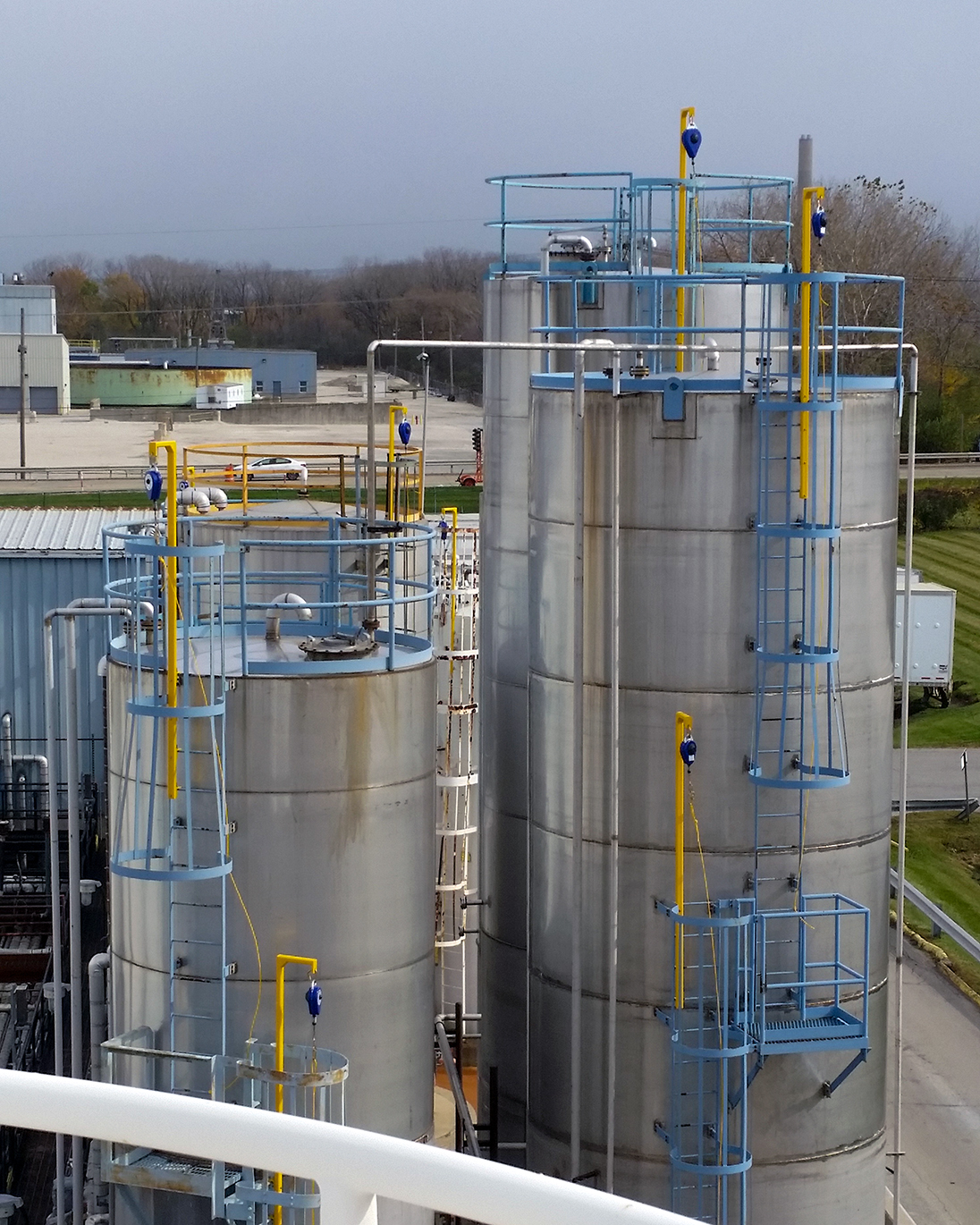
We know how to protect workers at-height.
What sets HySafe apart is how we use our knowledge. We pair education and expertise to make engineered fall protection easy.