Vertical Lifeline Content
Understanding Vertical Lifelines
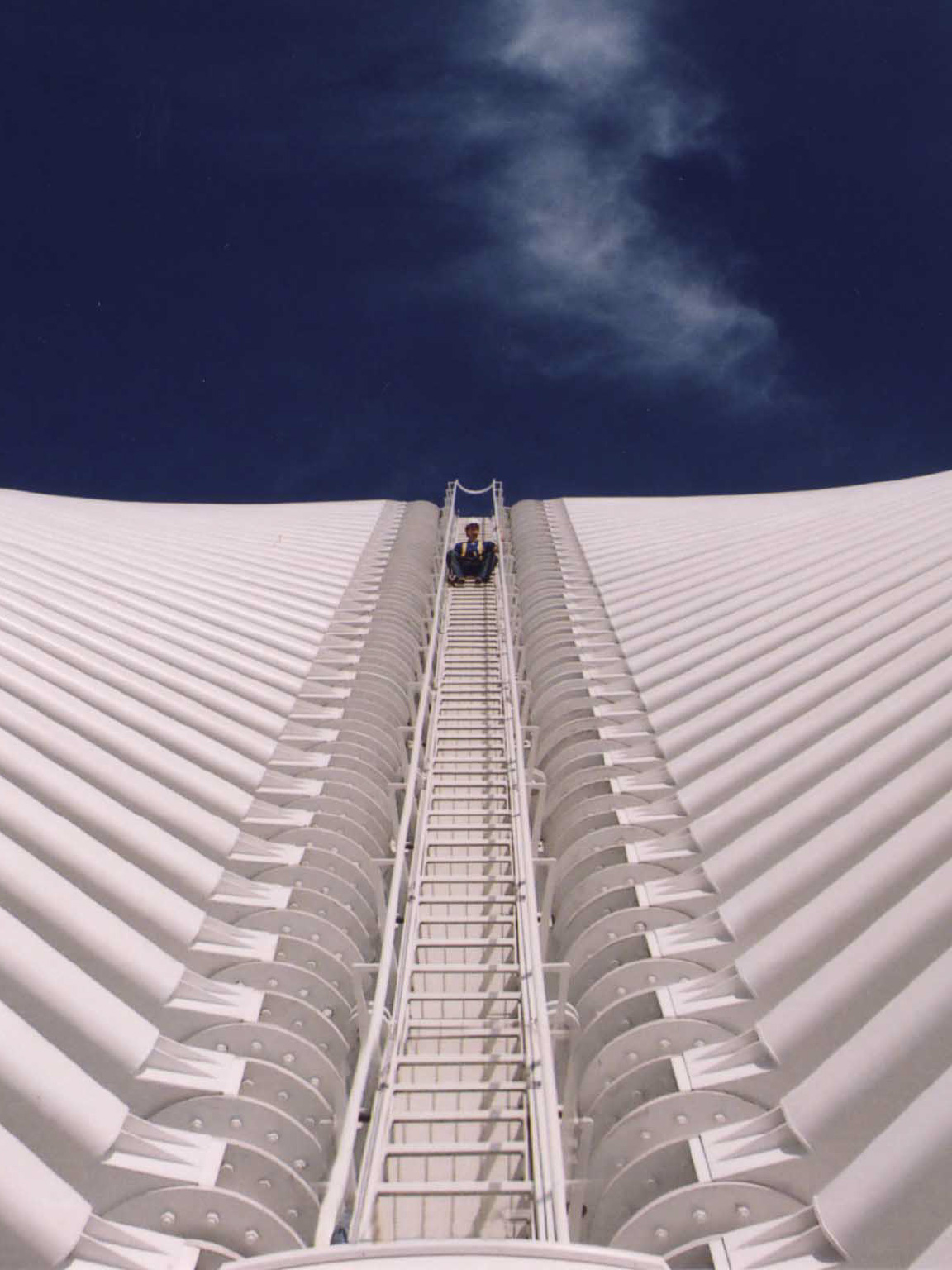
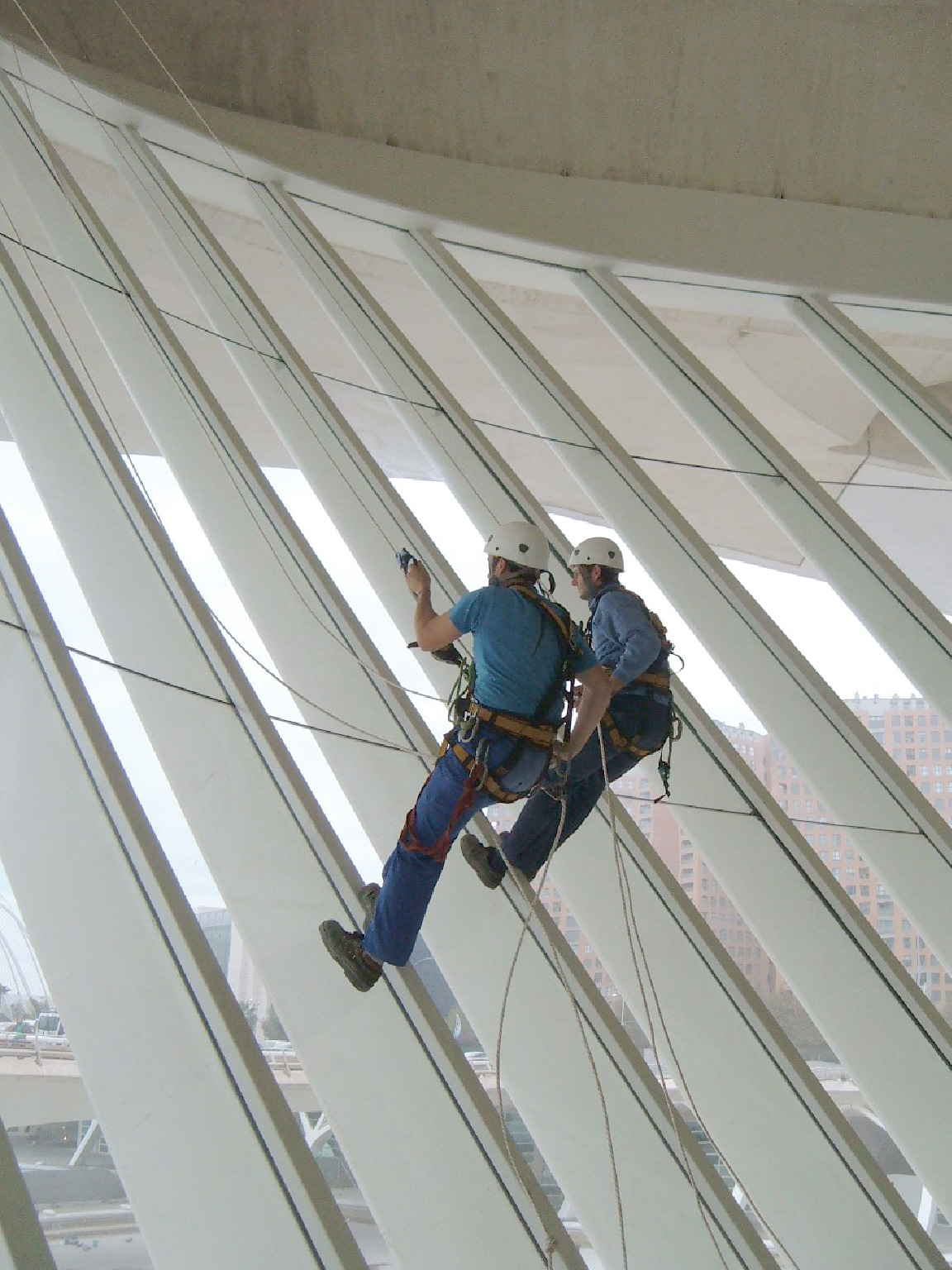
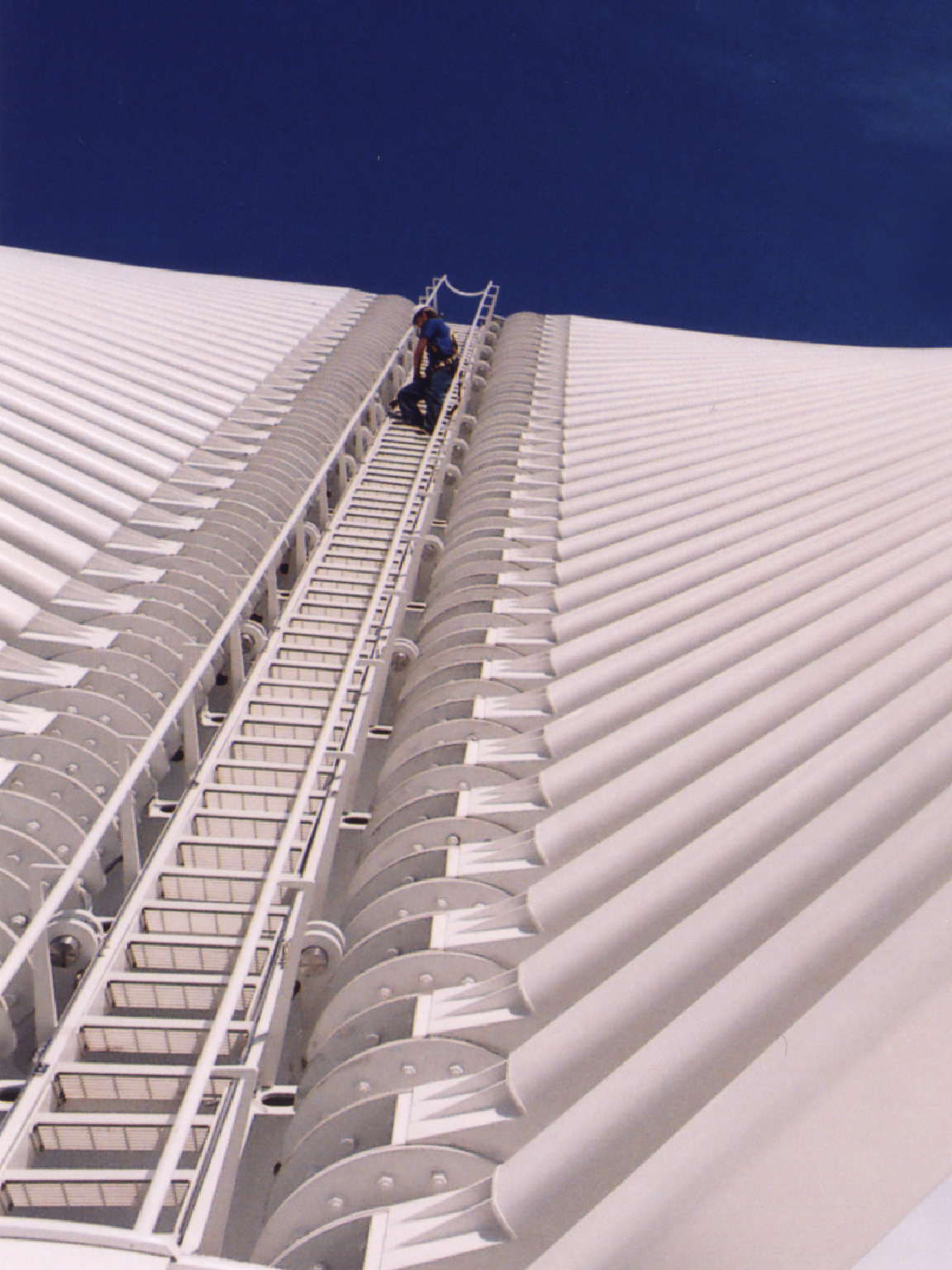
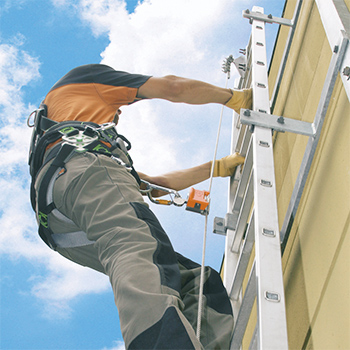
A vertical lifeline system is a vital fall protection system that allows workers to move safely up and down while remaining connected to an anchor. These systems are crucial in industries like construction and telecommunications, especially for tasks involving climbing towers, ladders, or scaffolds. They offer several benefits, including mobility, continuous connection to an anchor, and often more cost-effective installation that adapts easily to existing structures. Unlike horizontal lifelines systems (for side-to-side movement), vertical lifelines systems are specifically designed for up-and-down mobility.
Benefits
Built for Any Environment
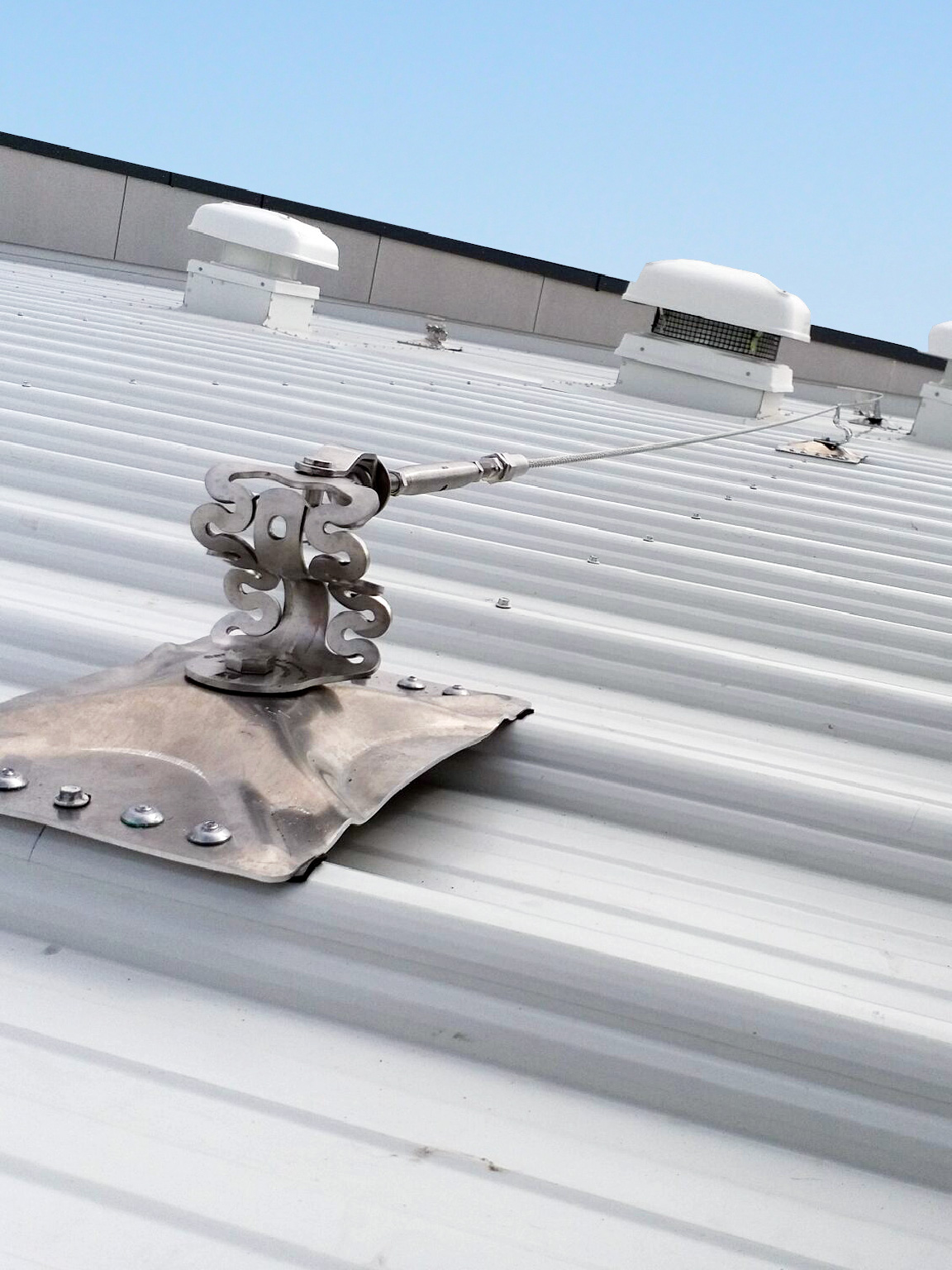
Stainless steel or galvanized options
Continuous Protection
Provides an uninterrupted tie-off
Versatile Installation
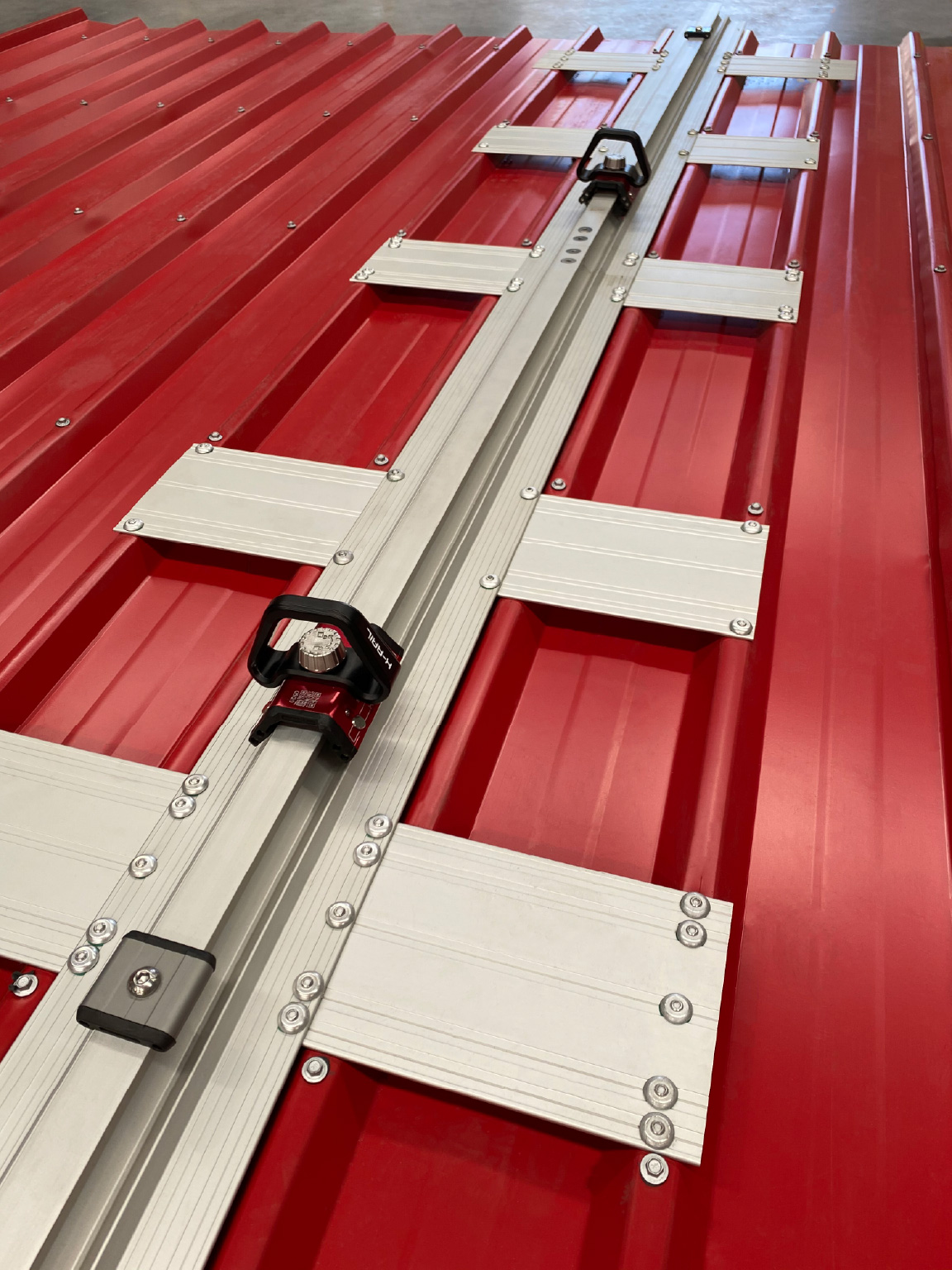
Permanent, temporary, or customized options
Vertical Lifeline Components
Vertical lifeline systems can be configured using either rope lifelines or cable lifelines. Each system includes specific components that work together to ensure worker safety.

Rope Lifeline System
Rope lifelines are often used as temporary or semi-permanent solutions. In some applications, a rope lifeline can be integrated into an engineered, fixed system using compatible hardware to provide safe and efficient access.
- Rope Lifeline: The core of the system, typically made from synthetic rope. Rope lifelines are lightweight, flexible, and easy to handle.
- Connectors: Components such lanyards or personal SRL’s that connect the worker’s harness to the rope grab that rides along the rope lifeline. All connectors must be rated for fall protection and compatible with the system.
- Rope Grab: A device designed specifically for rope lifelines allowing smooth upward and downward movement while automatically locking in the event of a fall.

Vertical Cable Lifeline System
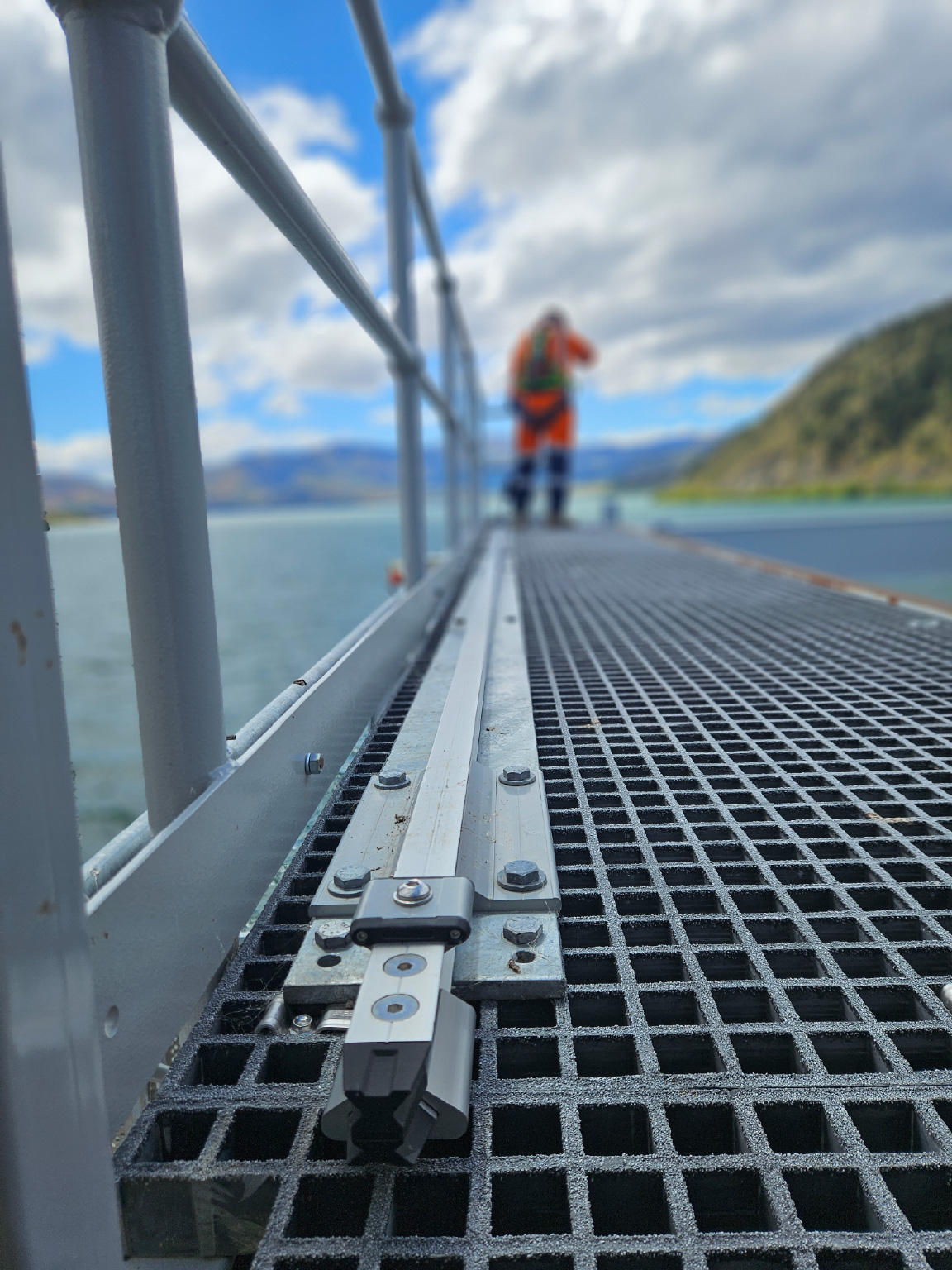
Vertical cable lifelines are often used for permanent installations.
- Cable Lifeline: Typically constructed from galvanized or stainless-steel cable, offering long-term durability and resistance to wear in demanding environments.
- Shock Absorber: Absorbs energy during a fall, limiting the force transmitted to the worker and the anchorage.
- Connectors: Components such lanyards or personal SRL’s that connect the worker’s harness to the cable system. All connectors must be rated for fall protection and compatible with the system.
- Anchor Point: The structural attachment point for the cable lifeline. Anchor points must meet load requirements and be positioned to reduce swing fall risks

Rope Lifeline System
Rope lifelines are often used as temporary or semi-permanent solutions. In some applications, a rope lifeline can be integrated into an engineered, fixed system using compatible hardware to provide safe and efficient access.
- Rope Lifeline: The core of the system, typically made from synthetic rope. Rope lifelines are lightweight, flexible, and easy to handle.
- Connectors: Components such lanyards or personal SRL’s that connect the worker’s harness to the rope grab that rides along the rope lifeline. All connectors must be rated for fall protection and compatible with the system.
- Rope Grab: A device designed specifically for rope lifelines allowing smooth upward and downward movement while automatically locking in the event of a fall.
Vertical Cable Lifeline System
Vertical cable lifelines are often used for permanent installations.
- Cable Lifeline: Typically constructed from galvanized or stainless-steel cable, offering long-term durability and resistance to wear in demanding environments.
- Shock Absorber: Absorbs energy during a fall, limiting the force transmitted to the worker and the anchorage.
- Connectors: Components such lanyards or personal SRL’s that connect the worker’s harness to the cable system. All connectors must be rated for fall protection and compatible with the system.
- Anchor Point: The structural attachment point for the cable lifeline. Anchor points must meet load requirements and be positioned to reduce swing fall risks

Regulatory Requirements
To ensure safety, vertical lifeline systems must meet strict standards:
- OSHA Regulations: Systems must comply with specific OSHA rules (29 CFR 1926.502 for construction; 1910.140 for general industry).
- ANSI/ASSE Z359 Standards: Many employers follow these voluntary standards, which go beyond OSHA's minimums, covering system design, testing, and training.
- User Training: All workers must be trained on proper use, pre-use inspection, and what to do in case of a fall.
- Inspections: Systems need to be inspected before every use. Formal inspections should occur every 6-12 months, depending on use, location and environment.
- Documentation: Keep updated records of manufacturer certifications, user manuals, and safety instructions.
Categories

Frequently Asked Questions
How often should vertical lifelines be inspected?
Vertical lifelines should be inspected by the user before every use and undergo a formal inspection by a competent person at least once a year, or more frequently depending on environmental conditions and usage.
What are the clearance requirements for engineered vertical lifelines?
Clearance requirements depend on the type of system, the length of the lifeline, and the use of energy absorbers. It’s critical to calculate fall clearance accurately to avoid contact with the nearest obstruction.
What is the difference between flexible and rigid vertical lifelines?
Flexible lifelines use rope or cable that moves with the user, while rigid systems use fixed rails or tracks. Rigid systems typically reduce fall distance and swing, offering more control in confined or structured environments.
Do I need an engineer to design my vertical lifeline system?
Complex or permanent installations should be reviewed or designed by a qualified engineer to ensure compliance with OSHA and ANSI safety requirements. In some cases, off-the-shelf vertical lifeline systems are available and may be appropriate depending on customer needs
Can vertical lifelines be used by more than one person?
Yes, but only if the system is specifically rated and designed for multi-user use. Each user must be spaced out appropriately, and the anchor and lifeline must meet the required load ratings.
Are vertical lifelines reusable after a fall?
No. If a fall occurs, the system must be immediately removed from service and inspected. Components that experienced a fall arrest must be replaced, even if there is no visible damage.
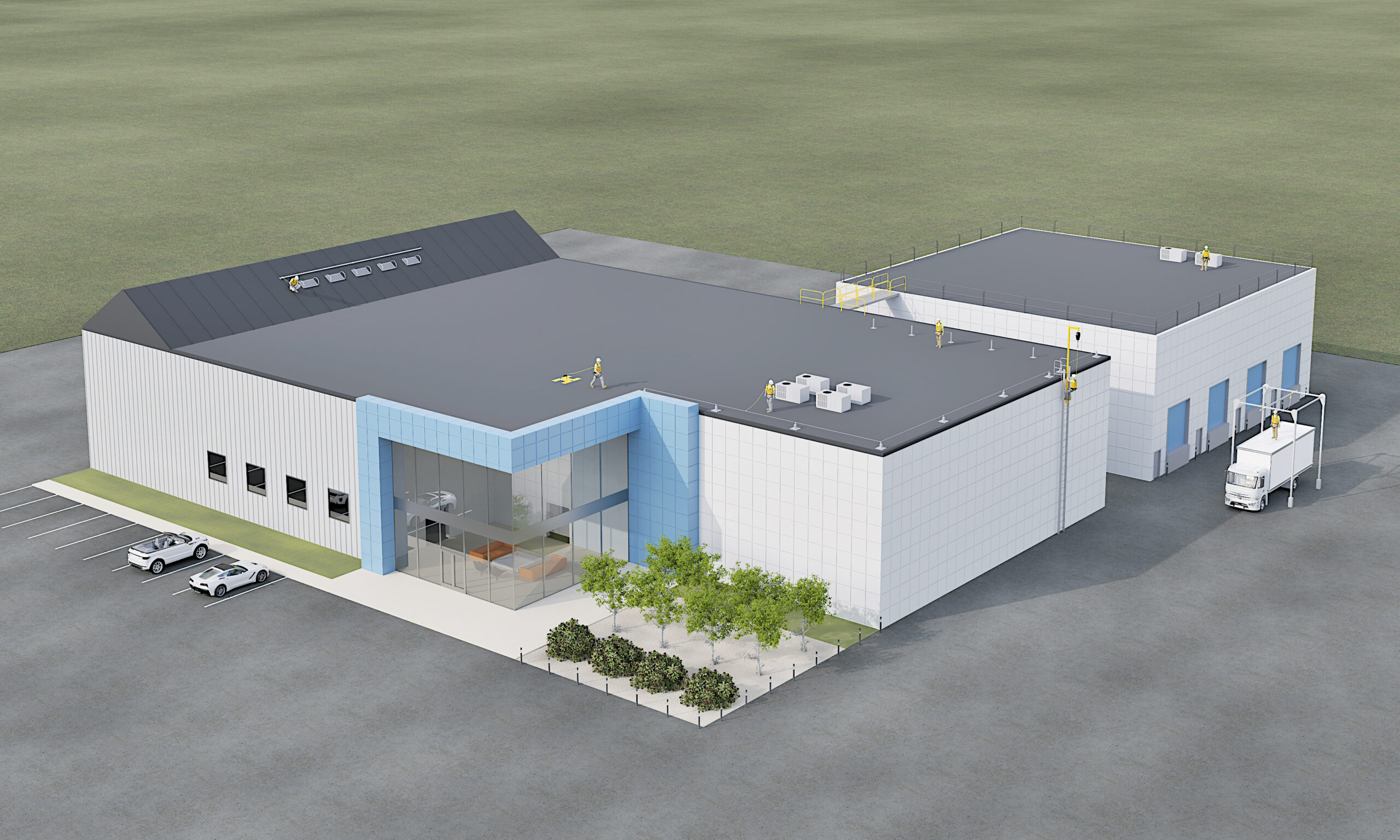
Check out the examples below of our fall protection equipment and systems in action!
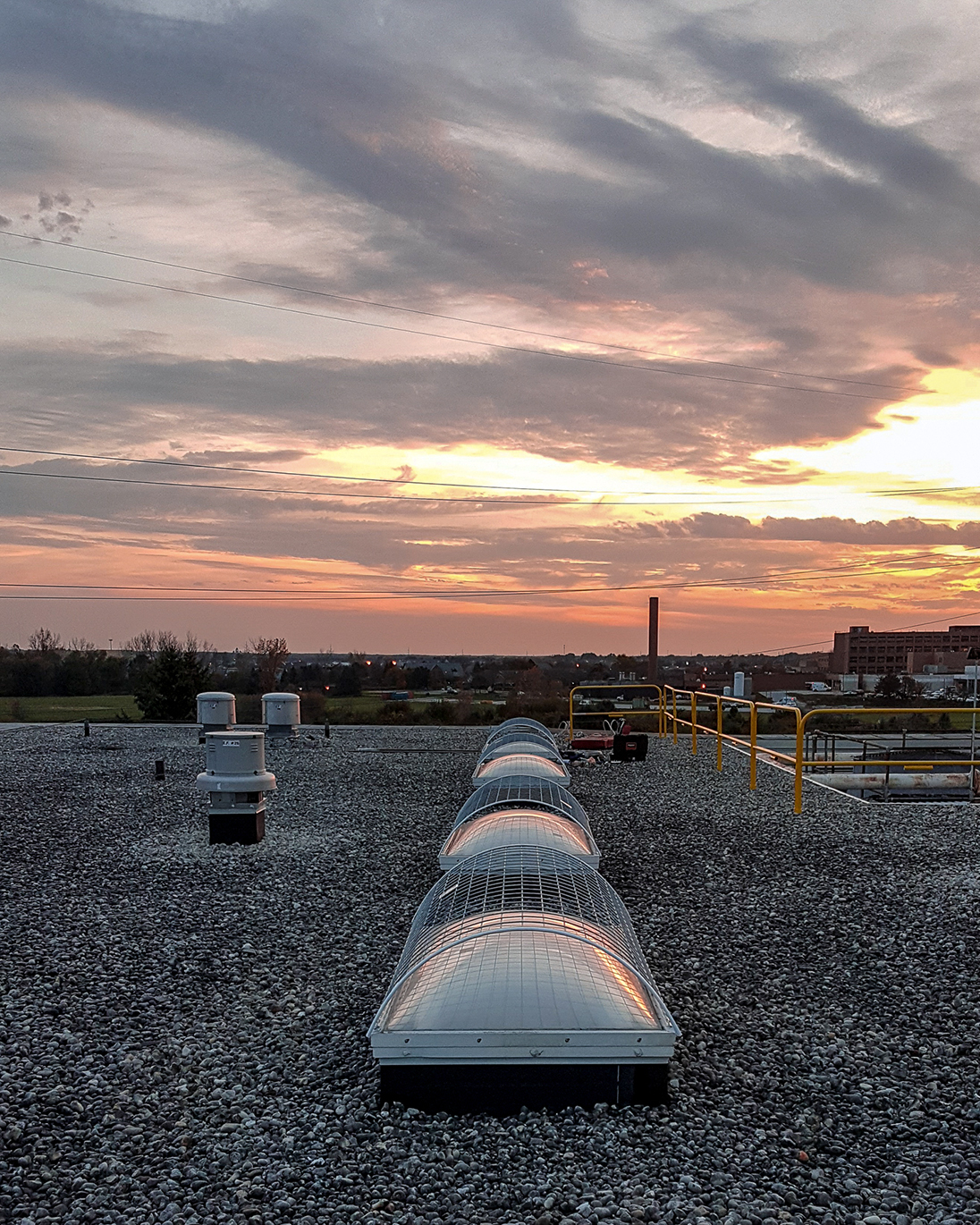
Skylights with Screens
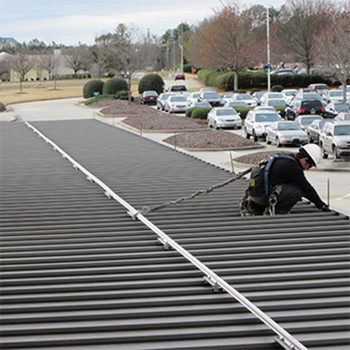
Durable Lifelines
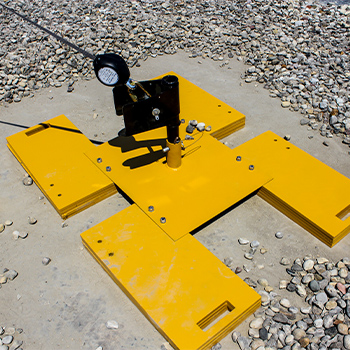
Heavyweight Anchor
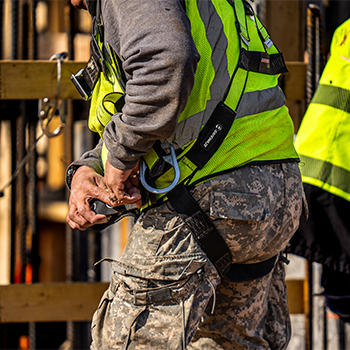
Comfort & Flexibility
Hands-Free Movement
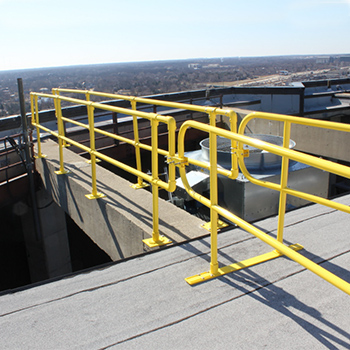
Safety Guardrail
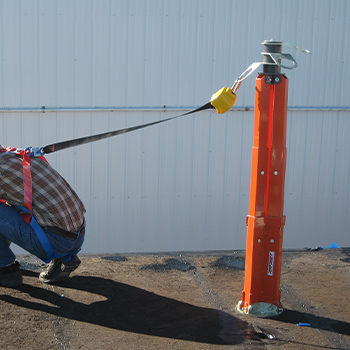
Anchor Solutions
Hazard Protection
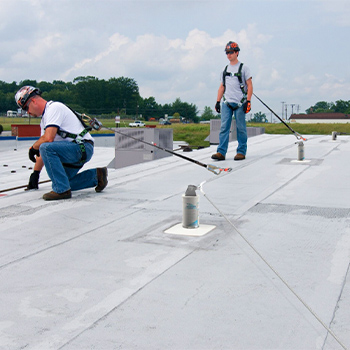
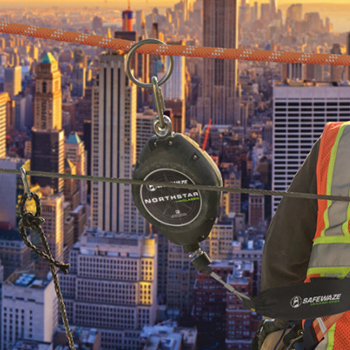
Self-Retracting Lifeline
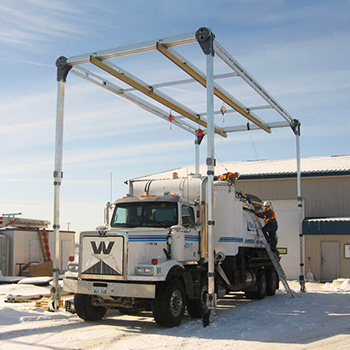
Adjustable HyBox
Testimonial
“The HySafe experts made it very easy to understand the OSHA requirements and it was a pleasure working with them from concept through installation and training.”
Vince Williamson
Quality Director, Rahco Rubber
Our Industries
Transportation
Custom fall protection for railroads, airports,
shipyards and trucking centers.
Stadium & Arena
At height safety systems for entertainment venues
and convention centers.
Amusement
Custom solutions for amusement parks and rides
including roller coasters.
Education
Custom solutions for amusement parks and rides
including roller coasters.
Manufacturing
Fall protection solutions for industrial, agricultural
and chemical plants.
Government & MIlitary
At height safety solutions for the armed forces and
military bases.
Construction
Custom protection for new construction,
expansions and general contractors.
Retail & Commercial
At height safety solutions for hotels, restaurants
and property management.
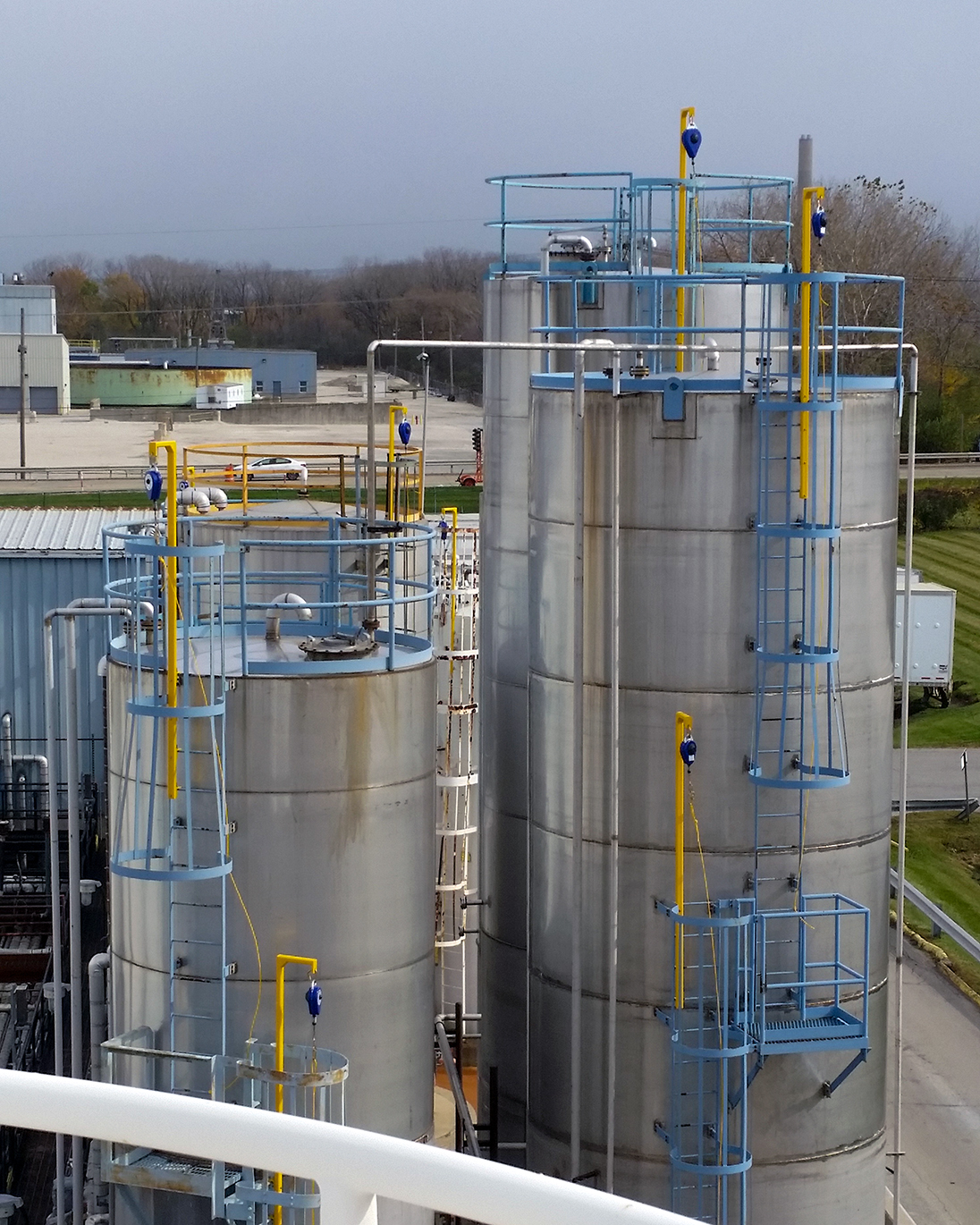
We know how to protect workers at-height.
What sets HySafe apart is how we use our knowledge. We pair education and expertise to make engineered fall protection easy.